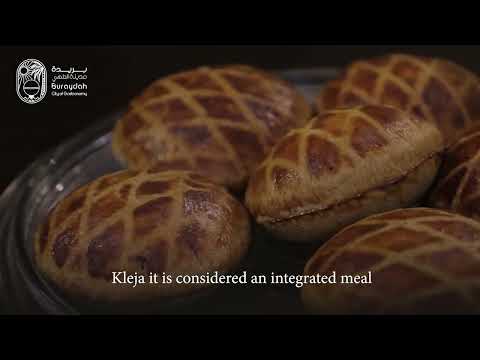
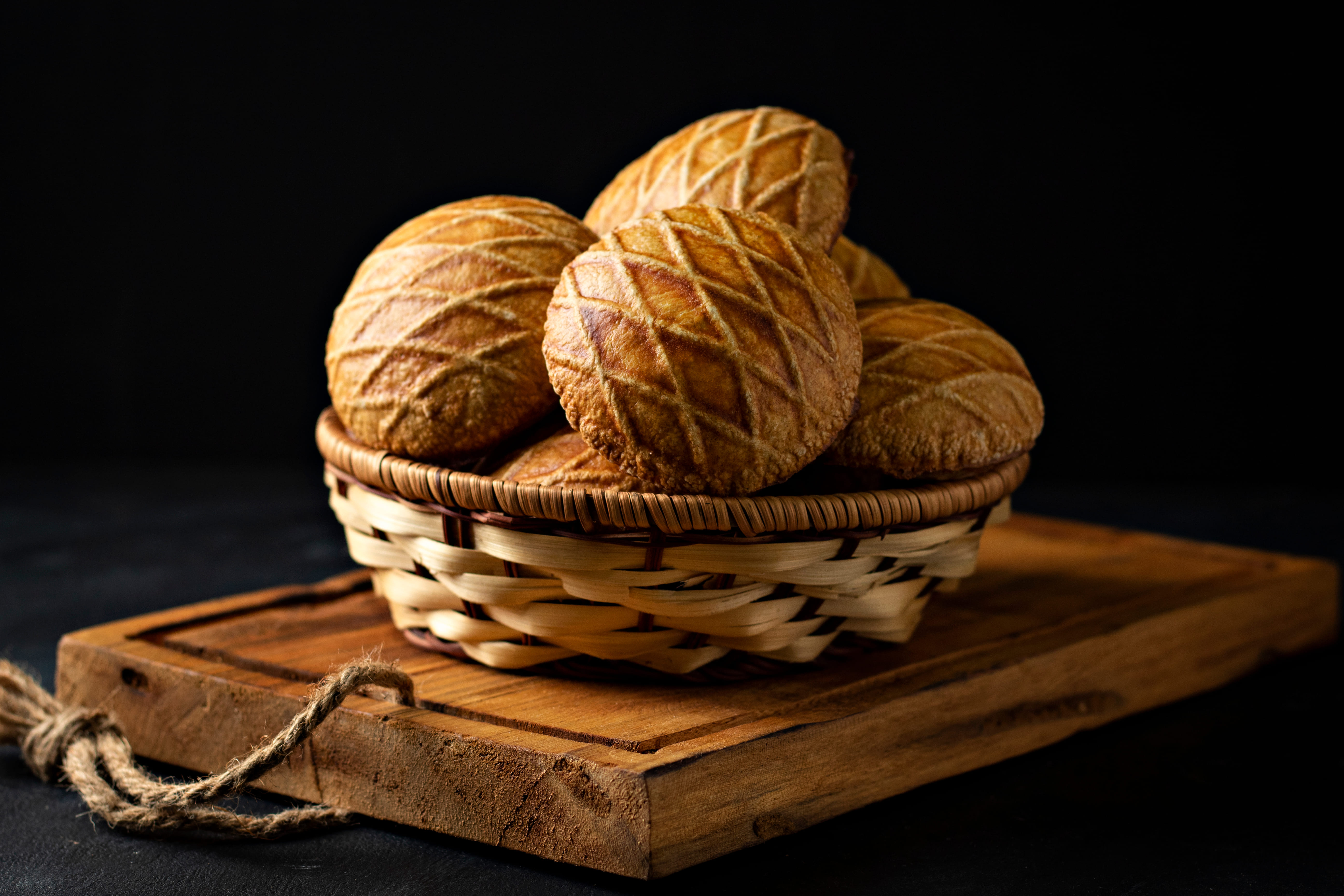
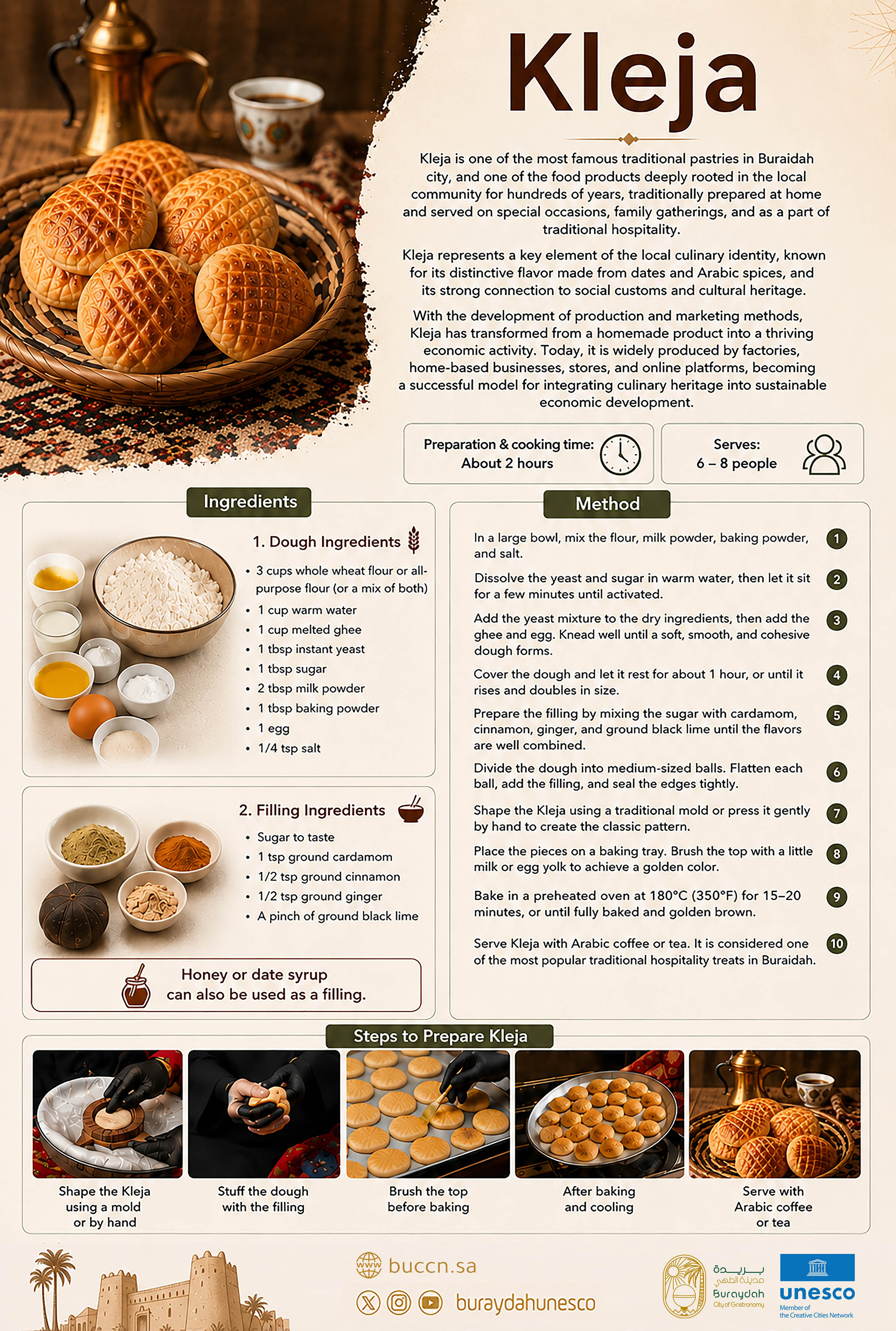
Kleija is considered one of the most prominent traditional food products associated with Buraydah for hundreds of years, becoming an integral part of the city’s cultural and social identity, and deeply present in daily life, social occasions, and inherited traditions.
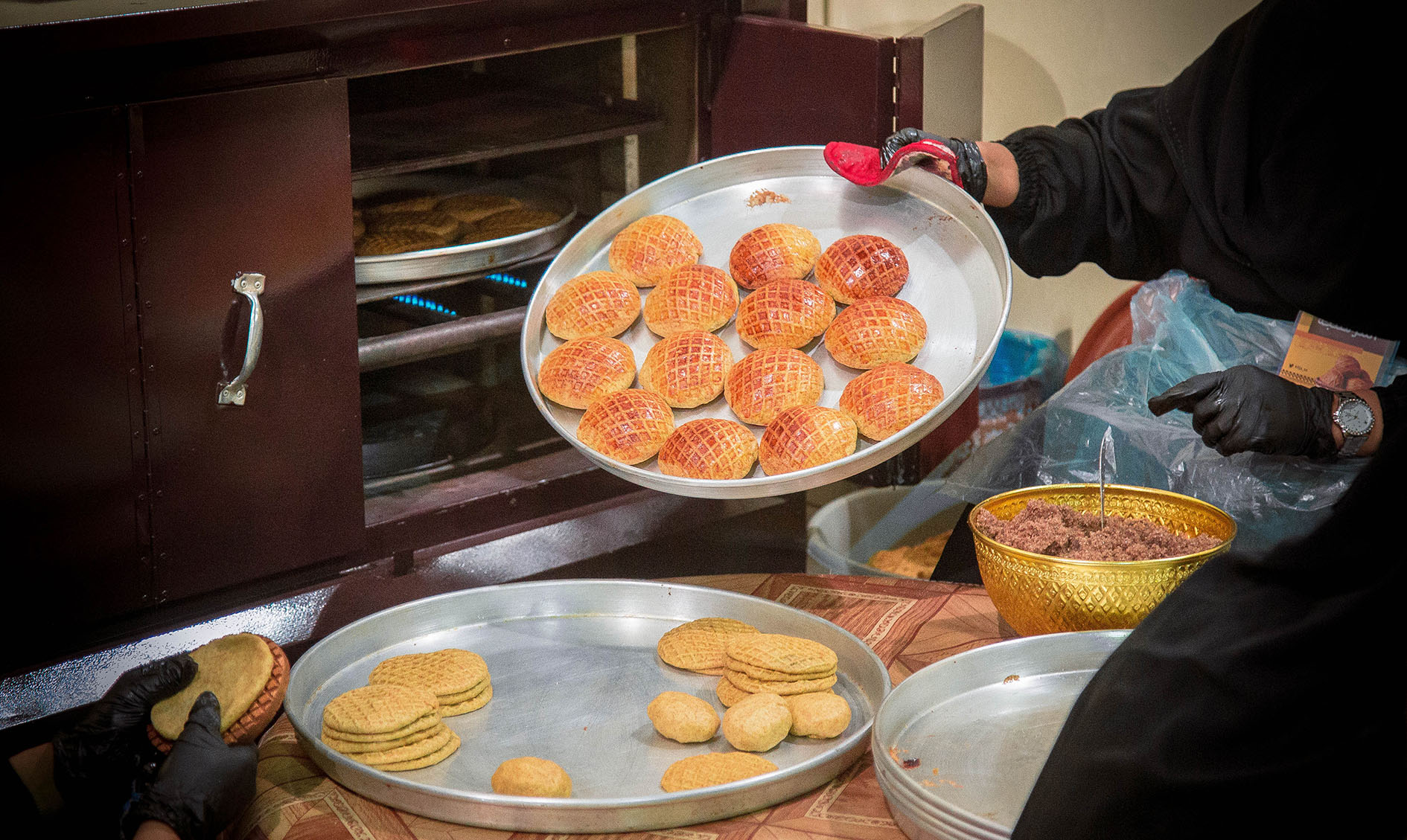
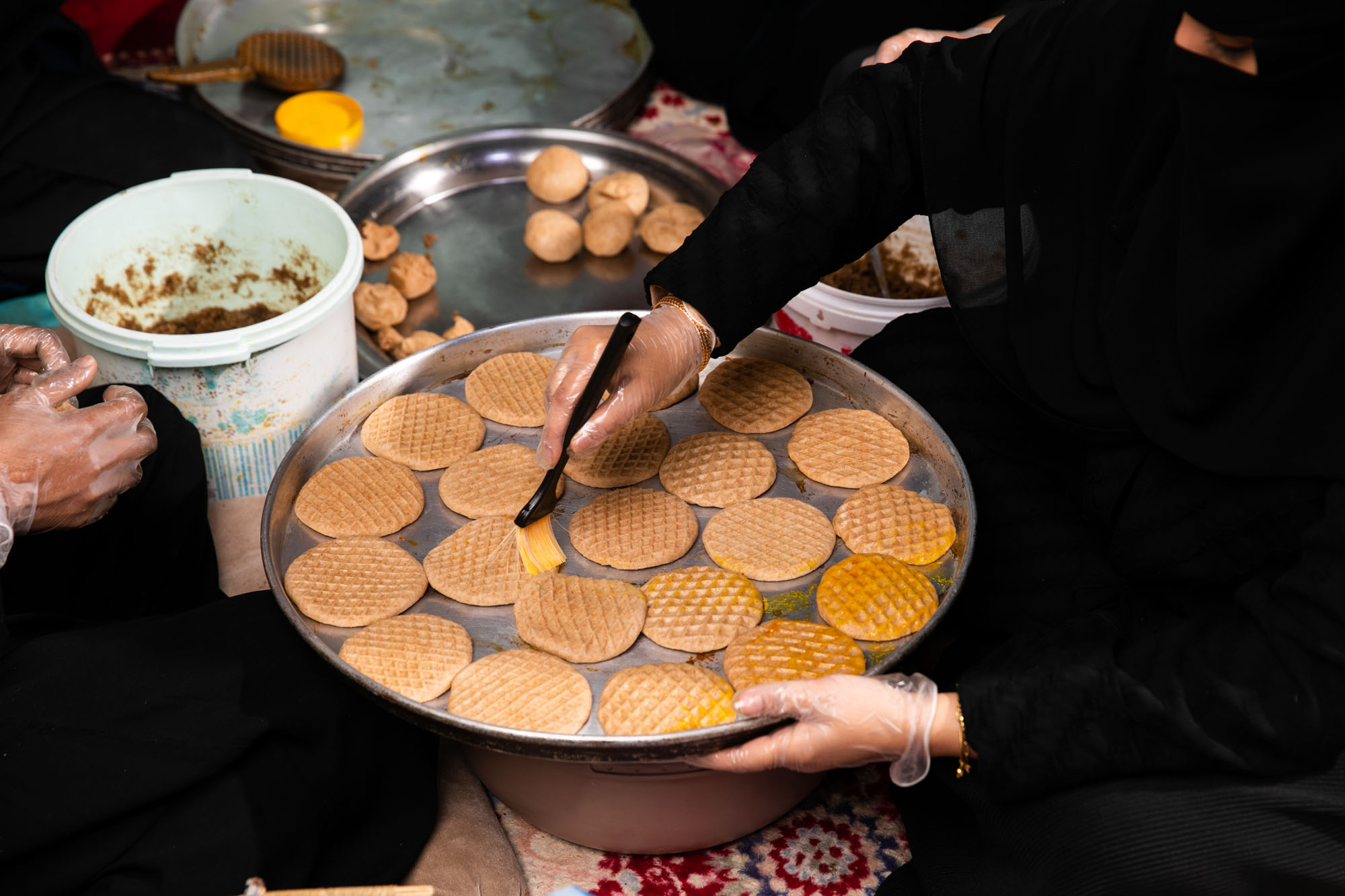
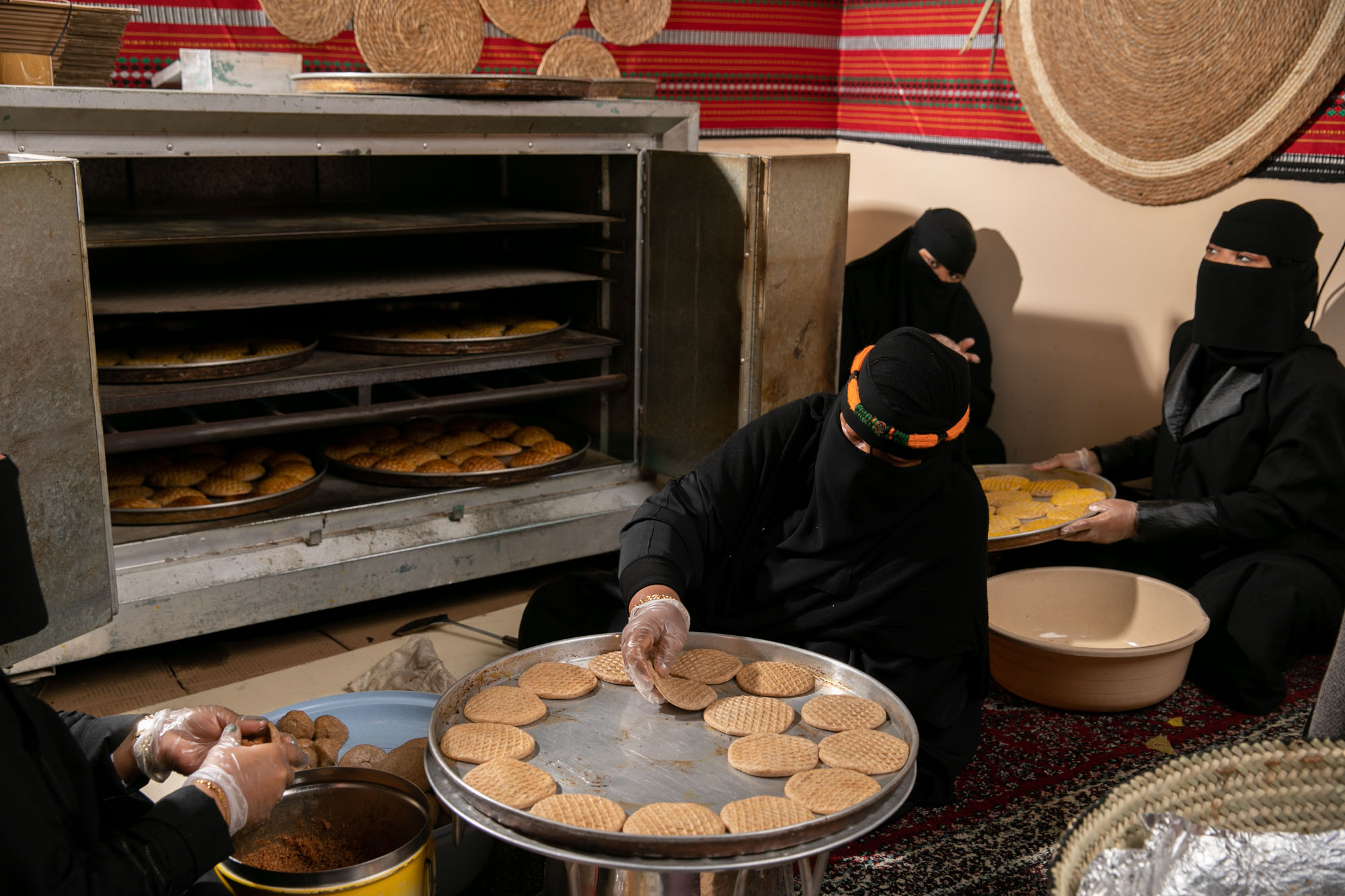
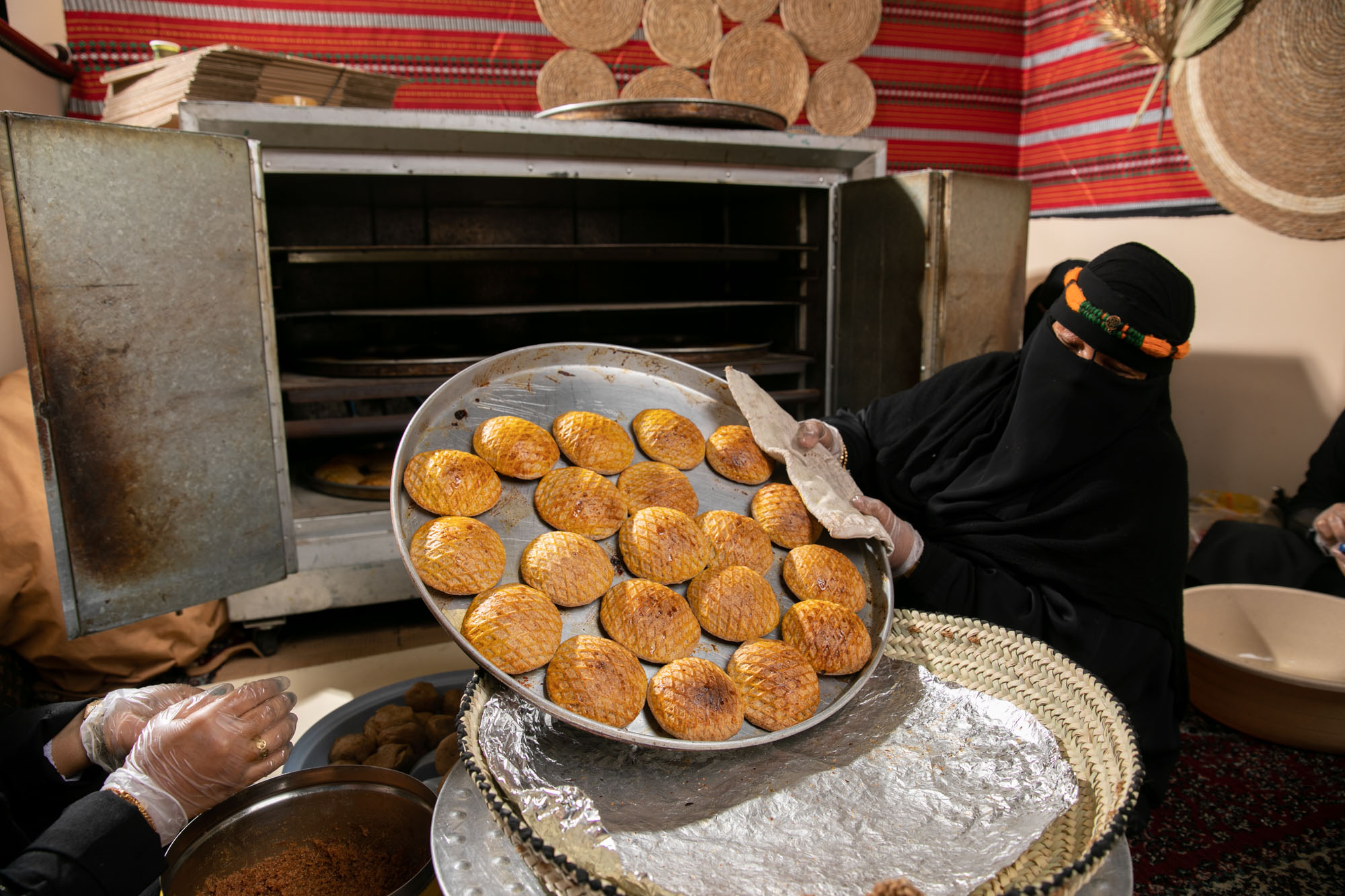
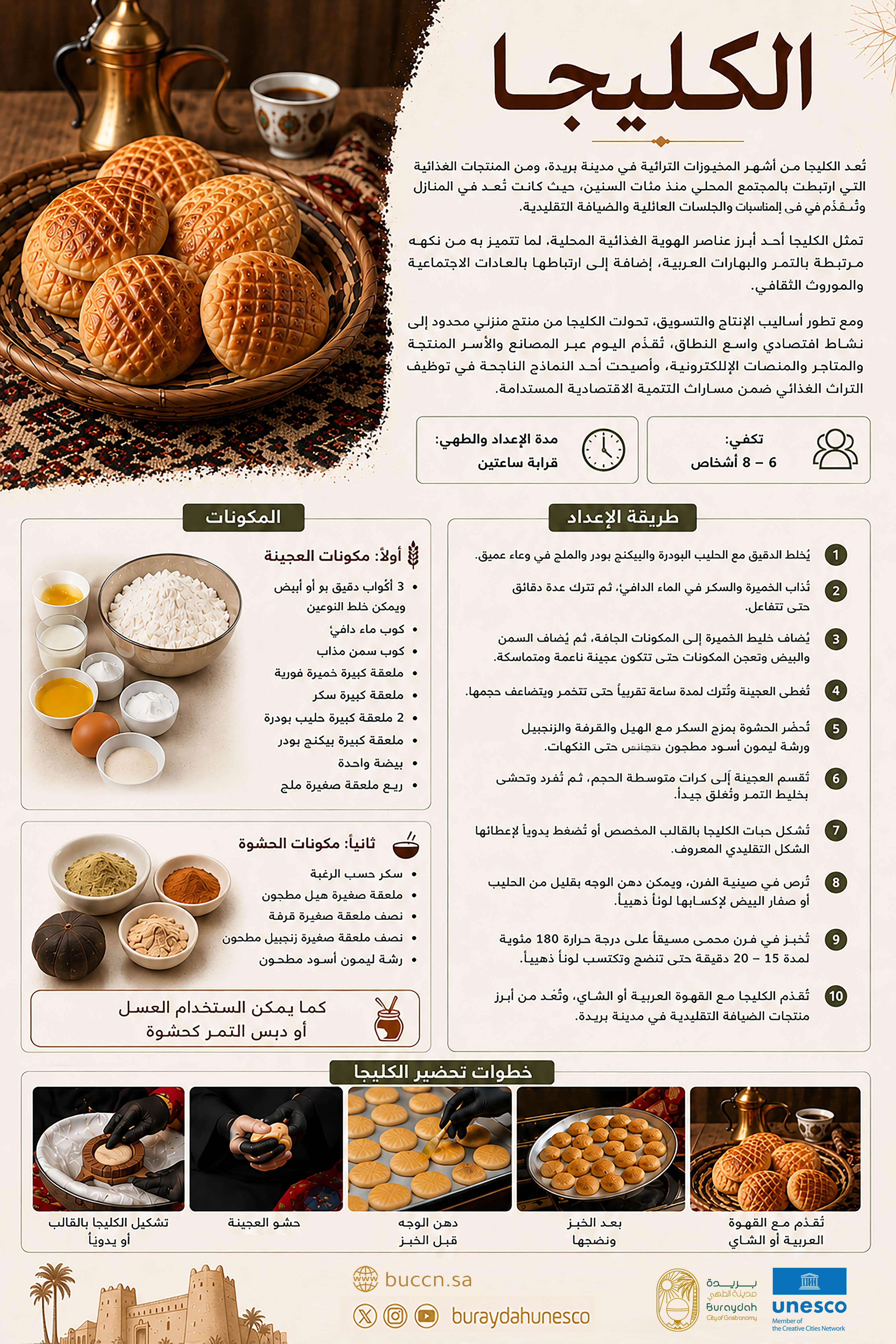
Historically, Kleija was homemade by women, particularly elderly women, who possessed extensive inherited experience in preparing and crafting its distinctive flavor. It is made from whole wheat dough mixed with traditional ghee or olive oil, and filled with ingredients such as date molasses, honey, or sugar blended with black lime and cinnamon. It is then baked carefully until it develops its characteristic golden color and rich taste.
Kleija was not merely a food product; it was closely connected to long-standing social customs and traditions. It was traditionally presented as part of wedding gifts and social gatherings, and became especially associated with the winter season due to its high nutritional and energy value. It is commonly served with hot milk or Arabic coffee.
Over time, Kleija evolved from a limited home-based product into a growing economic sector, supported by development programs aimed at empowering productive families and women, promoting home-based work, and preserving local culinary heritage as a component of sustainable development.
This transformation was further strengthened through the launch of the annual “Kleija Festival,” whose first edition was initiated in 2009 by His Royal Highness Prince Dr. Faisal bin Mishaal bin Saud bin Abdulaziz, Governor of Al-Qassim Region. The festival has since become an annual platform supporting local products, empowering families and entrepreneurs, and strengthening the presence of Kleija as both a cultural and economic product.
As a result, the Kleija industry has significantly developed, leading to the establishment of commercial enterprises, bakeries, and specialized factories utilizing modern production methods and technologies. Today, Kleija has become one of the most recognized heritage products associated with Buraydah both within Saudi Arabia and internationally.
Kleija is no longer merely a traditional product; it has become a practical model for leveraging culture and culinary arts to support sustainable development by transforming local heritage into economic and community opportunities that preserve identity and empower people. This represents one of the key principles of the UNESCO Creative Cities Network and reflects the approach that contributed to strengthening Buraydah’s position as a Creative City of Gastronomy.